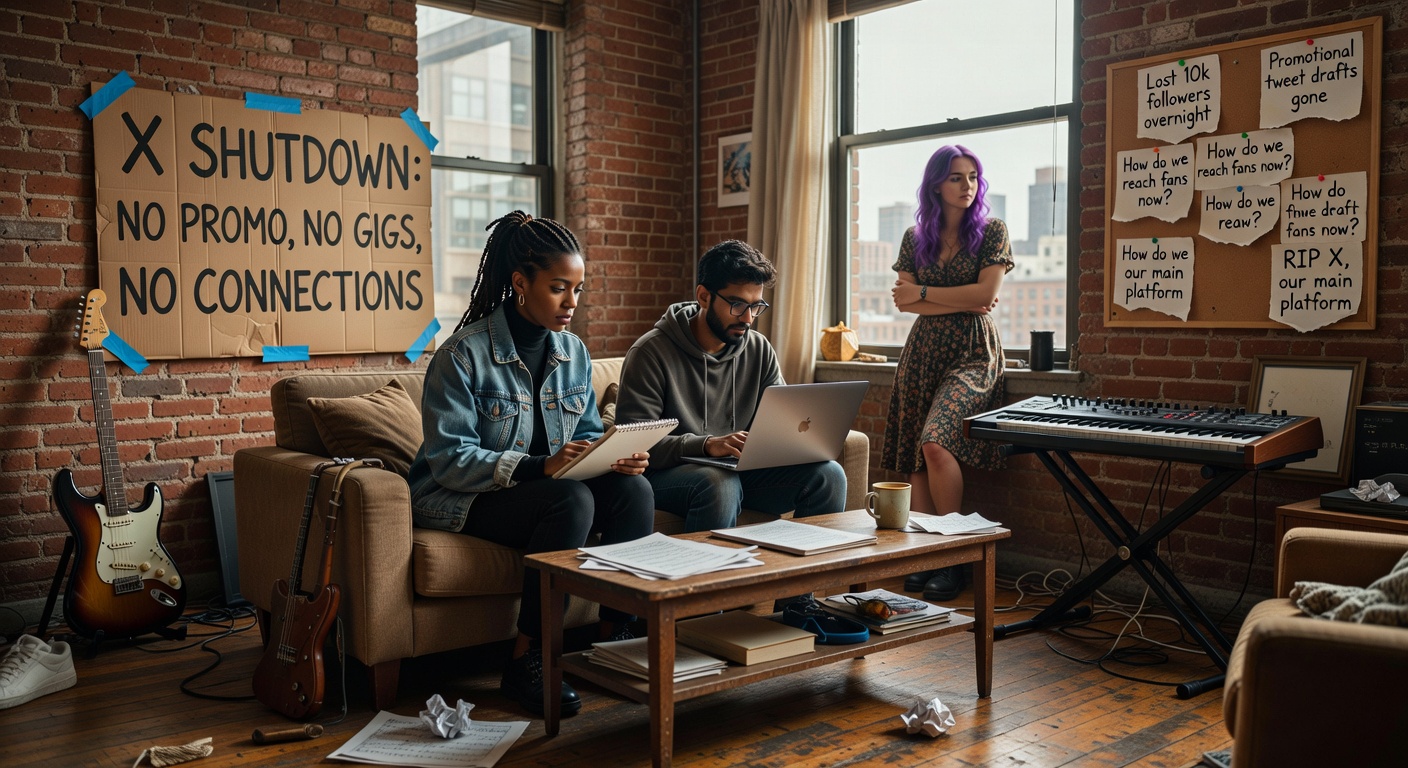
The End of an Era: Twitter’s Transformation and the Music Industry
When Elon Musk acquired Twitter in October 2022, few could have predicted the seismic shifts that would follow. The platform’s rebranding to X in 2023 marked more than just a name change—it signaled a fundamental transformation in how social media operates. For musicians, producers, and music industry professionals, this evolution has been both challenging and revealing.
The Golden Age of Twitter for Musicians
Twitter was once the ultimate platform for artist-fan interaction. From Kanye West’s infamous rants to Cardi B’s unfiltered thoughts, the platform gave musicians a direct line to their audience. Major album announcements, tour dates, and even beefs played out in real-time on Twitter.
Key moments that defined music on Twitter:
- Zayn Malik’s departure from One Direction announcement (2015)
- Taylor Swift’s Reputation era cryptic teasers
- BTS ARMY organizing streaming parties
- Independent artists building grassroots followings
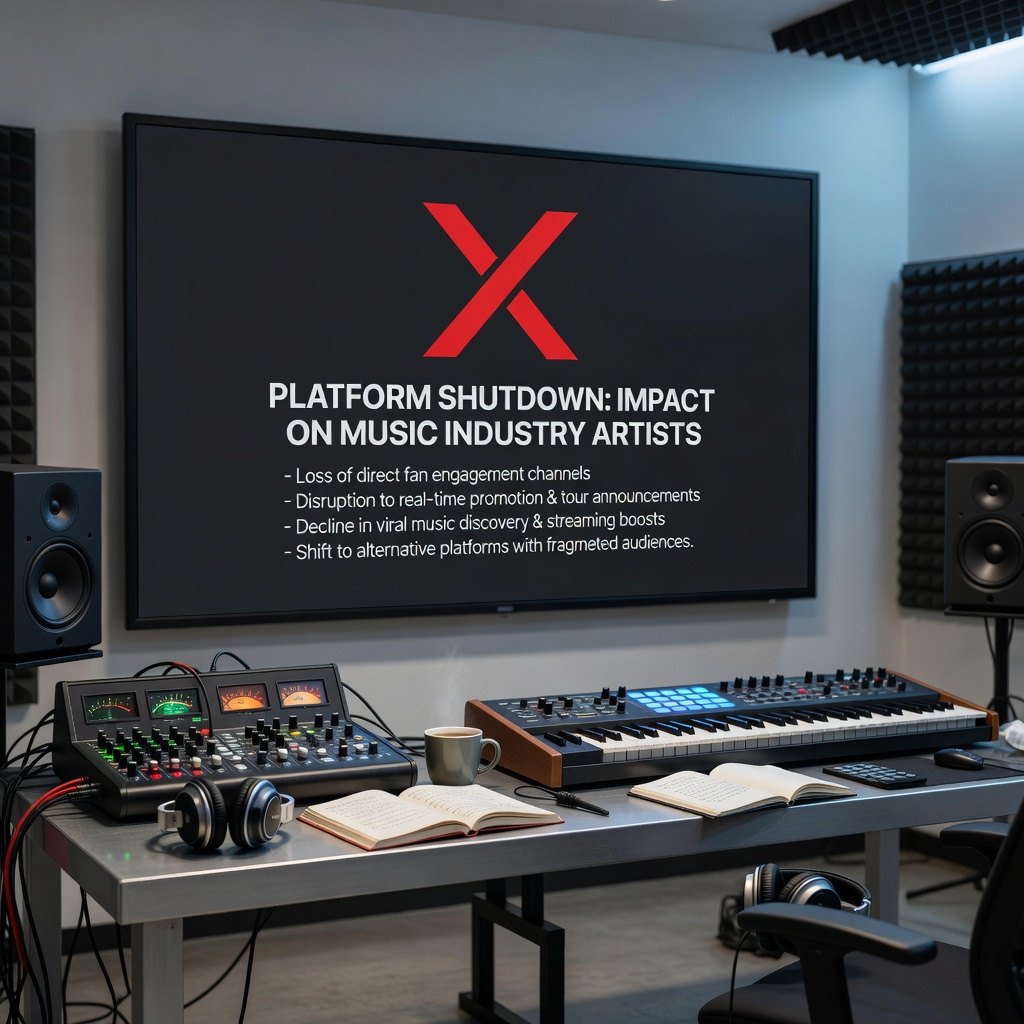
What’s Changed Under X?
The transition to X has brought significant changes that impact the music industry:
- Algorithm changes – Organic reach for artists has declined significantly
- Verification chaos – The blue checkmark system disruption confused fans
- Content moderation – Less protection from harassment for artists
- API restrictions – Third-party tools for music promotion limited
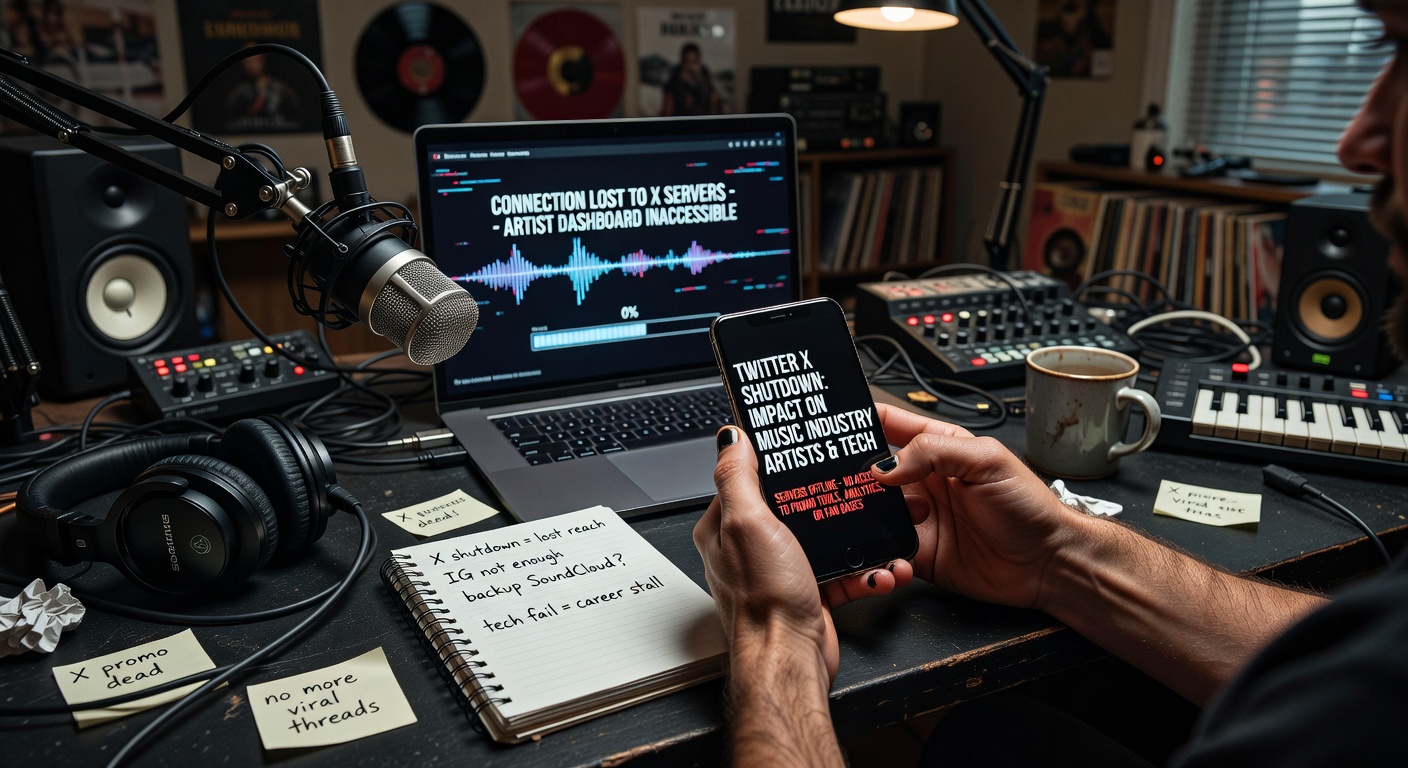
Where Are Artists Moving?
As X becomes increasingly controversial, musicians are exploring alternatives:
Bluesky – Jack Dorsey’s decentralized platform has attracted indie artists and those seeking more authentic connections. Artists like Grimes and others have experimented with the platform.
Threads – Meta’s Twitter competitor has seen adoption from pop stars like Shakira and Jennifer Lopez who appreciate the Instagram integration.
TikTok – Already the dominant platform for music discovery, TikTok has become even more crucial for artist promotion as Twitter/X declines.
The Equipment Angle: Social Media as Studio Tool
Modern music production now extends beyond traditional equipment. Today’s artists need:
- Smartphones with quality cameras – For behind-the-scenes content
- Portable recording setups – To capture ideas instantly for social posts
- Lighting equipment – Essential for professional-looking livestreams
- Audio interfaces for mobile – Sharing high-quality clips directly from the studio
Current Trends: What’s Happening Now
The music industry is adapting rapidly. We’re seeing:
- Drop culture – Surprise releases announced simultaneously across platforms
- Fan monetization – Artists building exclusive communities on Discord and Patreon
- AI-generated controversy – Debates about AI in music creation dominating discussions
- Vinyl resurgence – Physical media becoming a statement against digital chaos
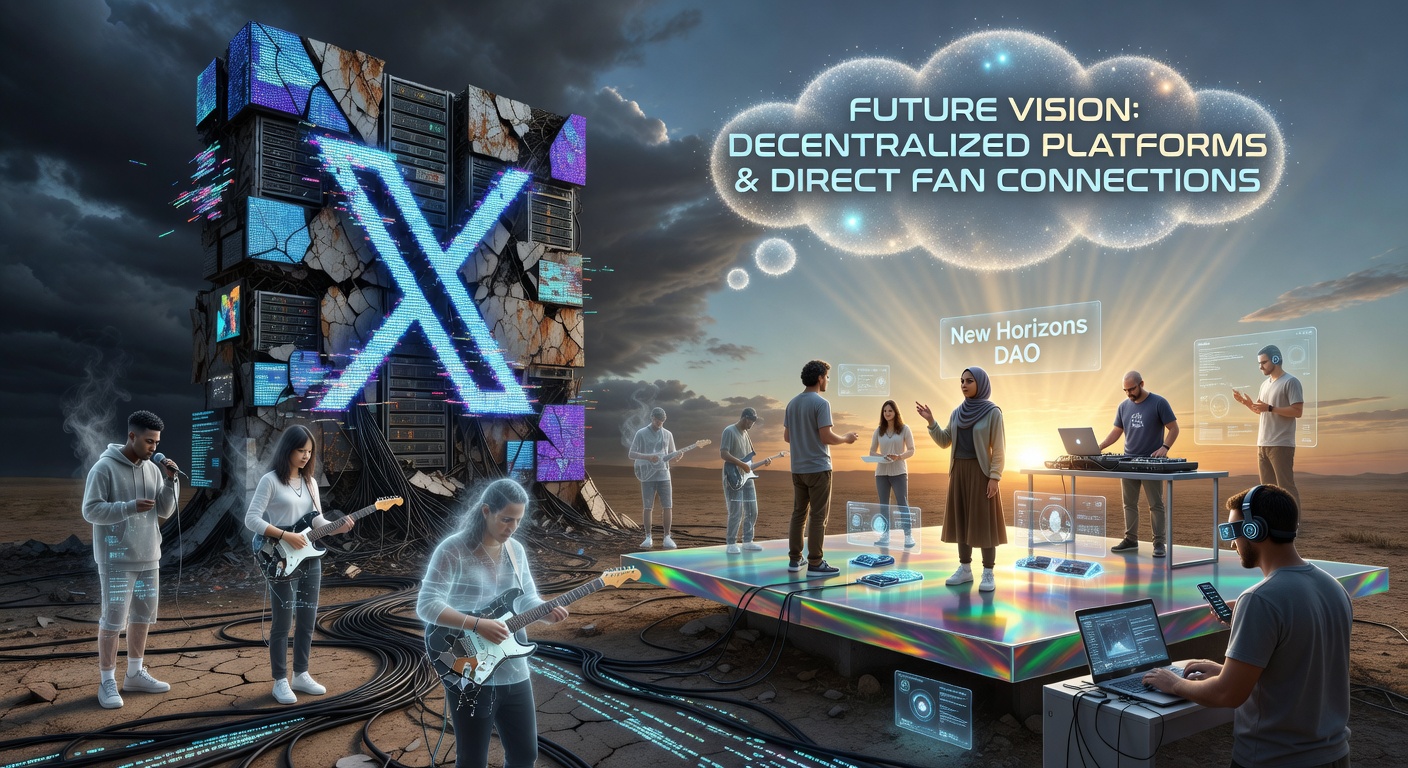
Looking Ahead
The “death” of Twitter as we knew it represents a broader shift in how music is shared and consumed. Artists who adapt to multi-platform strategies while maintaining authentic connections with fans will thrive. The equipment may change, the platforms may evolve, but the fundamental relationship between artist and audience remains the heart of the music industry.
What platform are you using to discover new music? Share your thoughts below.