You found a head you love and a cabinet that fits in the car, and now you have to connect them without cooking a transformer or buying the wrong box. Amp and cabinet matching comes down to two numbers and one cable choice, and once you understand them you can buy gear with confidence for years. Here is how impedance, power handling, cabinet size, and cable type actually work together.
Ohms First, Because It Is the One That Breaks Things
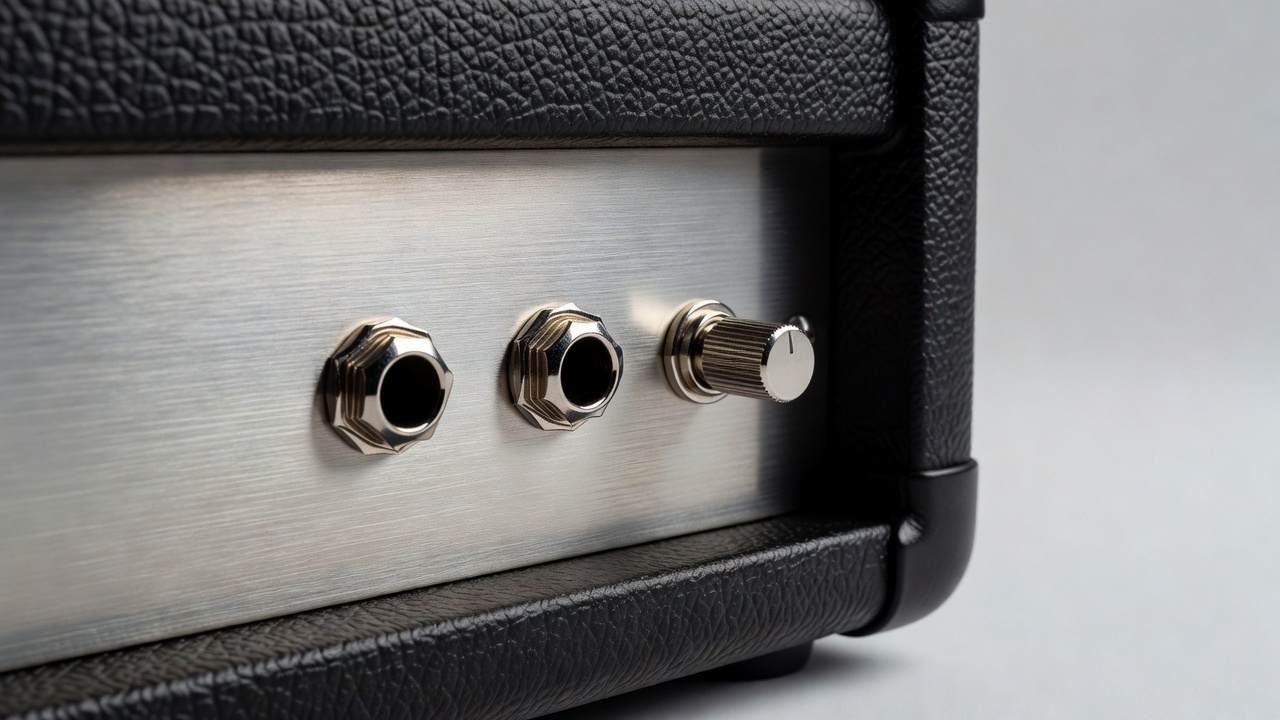
Impedance is measured in ohms, and it describes the electrical load the cabinet presents to the amplifier. Every head has a rating, usually printed beside the speaker jacks on the back panel. Get this right and you can stop worrying about the rest.
Tube amps want an exact match
A tube head is designed around one specific load, most commonly 8 ohms, sometimes 4 or 16. Many heads have a selector switch, others have separate jacks for each tap. Match the number on the head to the number on the cab and you are done.
If you have to mismatch in an emergency, know which direction is safer. A cabinet with lower impedance than the head expects, such as a 4 ohm cab on the 8 ohm setting, makes the output tubes work harder and run hotter. It shortens tube life but usually survives a gig. A cabinet with higher impedance, such as a 16 ohm cab on the 8 ohm setting, raises internal voltages and can arc the output transformer, so avoid it.
One absolute rule. Never power up a tube amp with no speaker connected. With no load the voltage has nowhere to go, and the output transformer is the part that pays for it.
Solid state amps want a minimum
Solid state heads list a minimum impedance, something like 4 ohms minimum. Anything at or above that figure is safe. Going below it makes the amp deliver more current than it was designed for, which trips the protection circuit at best and kills the output stage at worst. Two 8 ohm cabs on a 4 ohm minimum head is fine. A single 2 ohm cab is not.
Cabinet Wiring Changes the Number on the Label
The impedance printed on a cabinet is the result of how the speakers inside are wired, so two cabs with identical speakers can read 4, 8, or 16 ohms depending on the builder's choice.
Series and parallel
Two 8 ohm speakers in parallel give you 4 ohms. The same two speakers in series give you 16 ohms. Most guitar cabinets are wired in parallel, which is why a 2×12 with two 8 ohm speakers is usually a 4 ohm cab and a 2×12 with two 16 ohm speakers is usually an 8 ohm cab.
For four speakers, builders almost always use series parallel wiring, which keeps the total equal to a single speaker's rating. Four 16 ohm speakers give 16 ohms. Four 8 ohm speakers give 8 ohms. Four 4 ohm speakers give 4 ohms.
Two cabinets at once
When you plug two cabs into two output jacks on the same head, those jacks are almost always wired in parallel, so the total load drops. Two 16 ohm cabs give 8 ohms. Two 8 ohm cabs give 4 ohms. Work out the combined figure before you plug in, and set the head's impedance switch to match it.
Check it with a multimeter
Set a multimeter to resistance and touch the probes to the tip and sleeve of the cabinet jack. You will read a little lower than the rated number, because the rating is a nominal figure averaged across the frequency range. A cab that reads about 6.5 to 7 ohms is an 8 ohm cab. One that reads about 13 to 14 ohms is a 16 ohm cab. If you read something far outside those ranges, the wiring or a speaker is suspect.
Watts, Meaning Power In and Power Handling
Wattage gets treated as a volume rating, but for matching purposes it is really a safety margin.
What the head puts out
Tube amp wattage ratings are measured before distortion, and a cranked tube amp can put out noticeably more than its rating. A 50 watt head driven hard might deliver 70 or 80 watts of real output. Keep that in mind when you read a cabinet's rating.
What the cabinet can take
A cabinet's power handling, usually listed as RMS, is how much continuous power the speakers can absorb before the voice coils overheat. The simple safe rule is to choose a cab rated at or above your head's output. A 20 watt head into a 60 watt cab is a comfortable pairing. A 100 watt head into a 100 watt cab works and is common, though it leaves no headroom.
There is a trade off here. A cab rated far above the amp tends to sound tighter and cleaner, while a cab near or slightly below the amp rating will compress and break up earlier, which some players love and others replace speakers over. Slight overrating is the safe default. Massive overrating is fine electrically, but you may lose some of the speaker breakup you were chasing.
Speaker Cable vs Instrument Cable
This is the mistake that costs people amplifiers, and it comes down to two cables that look almost identical.
A guitar cable is a shielded instrument cable. It carries a very small, high impedance signal from your pickups into the amp, and the shielding keeps hum out. Its center conductor is thin because there is almost no current to carry.
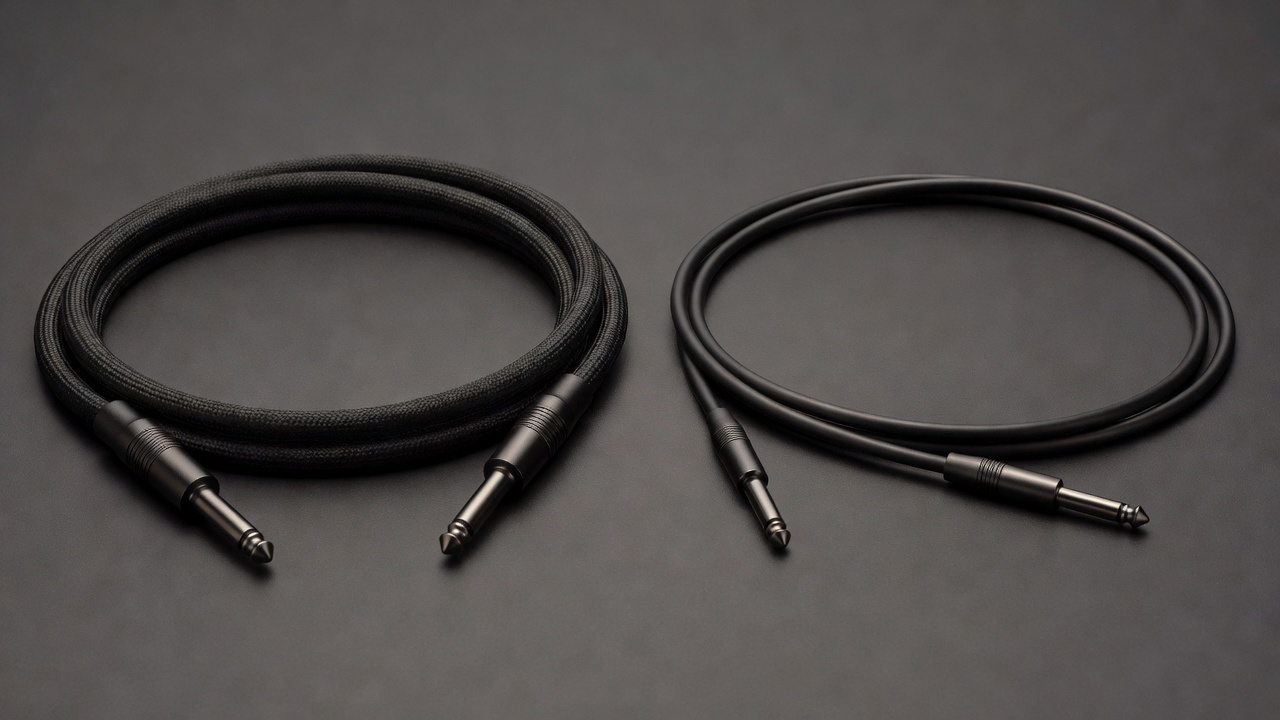
A speaker cable carries the amp's output, which is a low impedance, high current signal. It has two thick, unshielded conductors and no shielding at all, because shielding is not needed and would add capacitance that the output stage does not want to see.
If you use an instrument cable between a head and a cab, the thin conductor heats up, the cable can melt or short, and the short can take out your output transformer or output stage. It may work at a rehearsal and fail at a show. If you use a speaker cable as a guitar cable, nothing burns, but you may get extra hum and noise because there is no shielding.
The fix is simple. Label your cables or buy clearly marked ones. Speaker cables are often thicker, usually black jacketed, and frequently sold in short lengths for exactly this job. Use 16 gauge or heavier for anything longer than a few feet, and reach for a SpeakON connector if your head and cab support it.
1×12 vs 2×12 vs 4×12
Cabinet size is about weight, spread, and low end, not about quality.
A 1×12 is light, focused, and punchy in the mids, typically handling 30 to 60 watts. It records well, fits small stages, and gets carried up stairs without help. If you play a 15 to 30 watt head, this is often all the cabinet you need, and pushing a single speaker hard is a big part of the small amp sound.
A 2×12 is the practical middle. You get more low end and a wider spread than a 1×12, more power handling, and it still fits in most car trunks. Many 2x12s come with a mono and stereo back plate, which gives you options, but read that plate carefully because the impedance changes between modes.
A 4×12 moves serious air. The low end is bigger, the projection is wider, and the cabinet is heavy, often 60 to 100 pounds or more. Power handling is high because four speakers share the load. In a small room it can sound boomy and directional, and in a loud band it is hard to beat.
One thing matters as much as size. An open back cabinet has a looser, more spread out low end and lets sound escape behind you, while a closed back cabinet is tighter, punchier, and more directional. Compare those two before you compare speaker count.
Gear that helps
If you are still choosing, start with the head and check its impedance and power rating before anything else, then browse our Guitar Amplifier Heads to find one that matches your wattage and tone goals. Pair it with a cabinet from our Guitar Cabinets range, and buy a proper speaker cable at the same time so you never mix the two up.