You have a pile of pedals, a patch cable shortage, and no clear idea which box goes where. Most of the confusion disappears once you understand one idea: pedals do different jobs, and the job decides the position. Here is the order that works for almost every rig, plus the few places where breaking the rule sounds better.
Think In Two Zones, Not One Long Chain
Your signal leaves the guitar, travels through the pedals on the floor, and arrives at the amp input. Everything up to that point is the front end. Inside the amp, the preamp adds gain and tone shaping, then the signal usually hits an effects loop, then the power amp, then the speakers.
That gives you two zones:
- Front of amp. Anything that shapes the raw guitar signal. Tuners, wahs, compressors, fuzz, overdrive, distortion, EQ, boost.
- Effects loop. Anything that should be added after the amp’s own distortion. Delay, reverb, sometimes chorus and tremolo.
If your amp has no loop, everything goes out front in the same order. That is fine, and plenty of players prefer it.
The Standard Pedal Chain Order
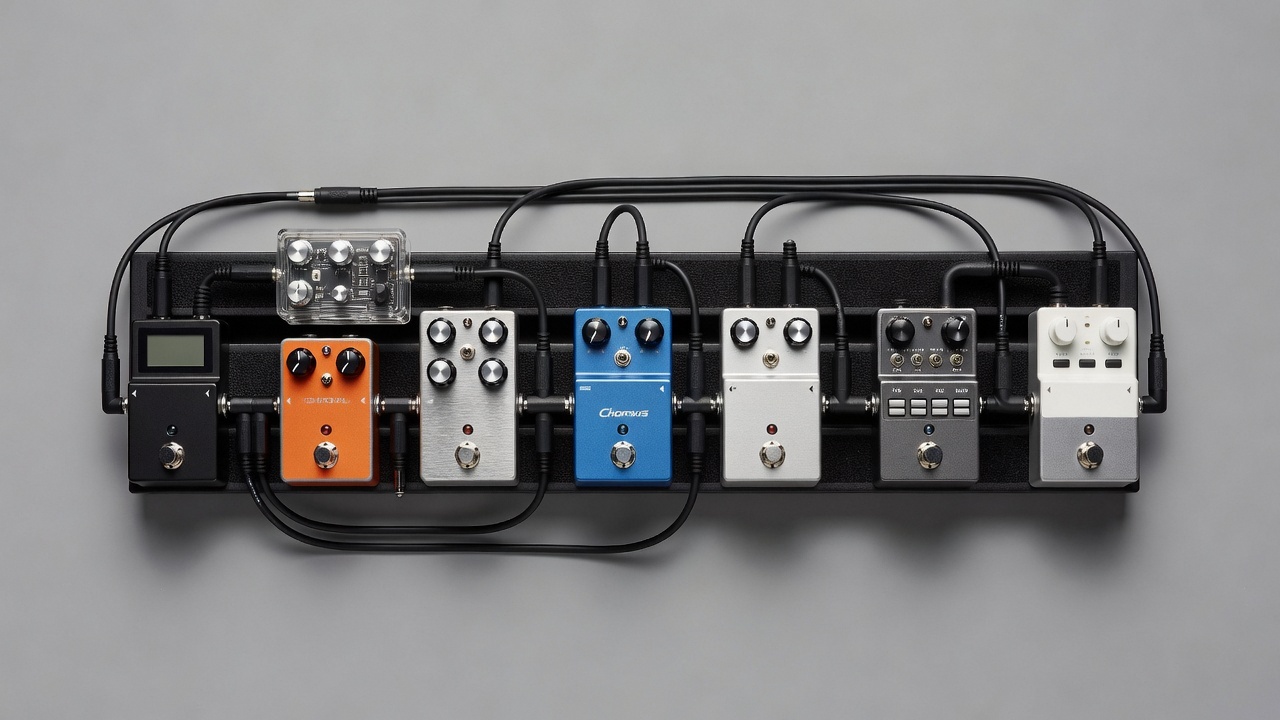
Start here. Almost every great board is a variation on this list.
- Tuner. First, so it sees the cleanest possible signal.
- Wah and filter pedals. They respond to picking dynamics, so they want the raw guitar.
- Compressor. Evens out your attack before it hits the gain stages.
- Fuzz. Wants to be early, ideally first. More on this below.
- Overdrive. Low to medium gain, the core of your crunch tone.
- Distortion. Higher gain, or a second stage stacked into the overdrive.
- EQ and clean boost. Last in the drive section so it can push everything before it.
- Modulation. Chorus, phaser, flanger. They color the whole distorted signal.
- Tremolo and vibrato. Time based, so they usually sit near or after modulation.
- Delay. Repeats whatever it is fed. Feed it your finished tone.
- Reverb. Last, so it simulates a room around everything.
- Looper. Very last, so it captures the full sound and lets you layer over it.
The logic is simple. Pitch and dynamics first. Gain next. Then the pedals that add width and space. Time effects go last because a delay repeating a reverb tail sounds like mud, while a reverb sitting after a delay sounds like a room.
The Drive Section Is Where Order Really Matters
Swapping two modulation pedals barely changes anything. Swapping two gain pedals can change your entire tone.
Boost before or after drive
A boost placed before an overdrive hits the pedal harder and makes it distort more. A boost placed after makes the already distorted sound louder without adding grit. If you want a solo to cut through, put the boost after. If you want the overdrive itself to bite harder, put it before.
Fuzz goes first, almost always
Fuzz pedals are the exception to nearly every rule. Many of them are built to interact directly with the impedance of your guitar pickups. Put a buffered tuner or a wah in front and the fuzz can turn thin and gated in a bad way. Try fuzz as the very first pedal, before the tuner if needed. If your fuzz is a modern design with an input buffer, this matters less.
Stacking two overdrives
The common trick is a low gain pedal running always on as your base tone, with a second pedal in front of it for heavier parts. The pedal in front pushes the one behind it, so the second pedal's volume knob becomes your gain control. Set the always on pedal fairly clean and let the front pedal do the shouting.
Modulation And Time Effects
Chorus, phaser, flanger
These belong after drive. Feed them a distorted signal and they add movement to your finished tone. Feed them a clean signal and put distortion after, and you get a very different, more aggressive sound. Both are valid, but the first is what you hear on most records.
Tremolo
Tremolo cuts volume up and down, so it behaves like a time effect. Some players put it right after drive, others put it near delay. Try it after modulation and before delay as a starting point.
Delay and reverb
Delay before reverb. If you use only one, put it last. Both should sit after your gain pedals so the repeats and tails are clean copies of your distorted tone rather than distorted copies of a clean signal.
Also watch the mix. Delay and reverb at home practice levels often sound too quiet once a drummer starts. Set them louder than feels comfortable alone.
Getting The Most From Your Amp’s Effects Loop
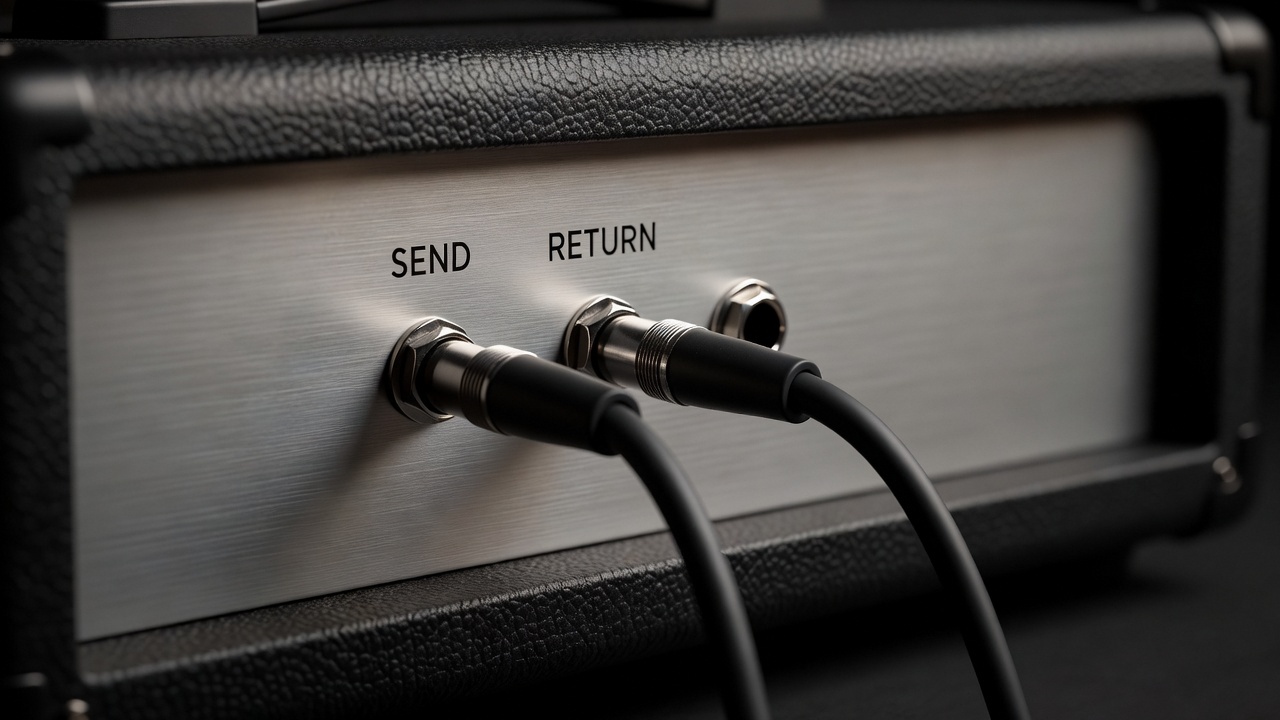
If your amp has a loop, it splits the signal after the preamp. Time effects in the loop stay clean and clear even when the amp is cranked and dirty. That is the whole point.
A typical setup uses four cables:
- Guitar into the front end pedals.
- Front end pedals into the amp input.
- Amp effects send into the delay and reverb.
- Delay and reverb return into the amp effects return.
A few practical notes. Keep loop cables short and good quality, because the loop runs at a lower level and long runs pick up noise. If your loop has a level switch, set it to match your pedals, usually instrument level. Some pedals hate being in a loop and will hiss or lose top end, so test each one. And if your amp has a series loop, your dry signal passes through the pedals, so a faulty cable kills everything.
If the loop sounds worse than running everything out front, trust your ears and go out front. Plenty of professional boards do exactly that.
Two Chains You Can Copy Today
Small board, no effects loop
Tuner, wah, compressor, overdrive, distortion, chorus, delay, reverb. Eight pedals, one row, everything into the amp input. Use the amp's clean channel and get your dirt from the pedals.
Amp with a loop and a dirty channel
Tuner, wah, overdrive used as a boost, then into the amp input. Chorus, delay and reverb in the loop. This gives you the amp's own distortion as your main tone and keeps the time effects crisp behind it.
Build the board, play it loud, then move one pedal and listen. That is how you find your order.
Gear that helps
A good chain deserves an amp that takes pedals well, so start with a clean platform that has a usable effects loop from our Guitar Amplifiers range. If you run a separate head, a matched Guitar Cabinet keeps the low end tight and predictable. And if you are still choosing the guitar that feeds the whole rig, browse our Electric Guitars before you commit.