Most first guitar purchases go wrong for one of two reasons: the player picked a type of guitar that does not match the music in their head, or they picked the right type and got a badly set up example that made learning painful. This guide walks you through the three main families of guitar, then through the physical details that decide whether you will still be playing in six months.
Start with the music you actually want to play
Before you look at a single spec sheet, answer one question honestly. What do you hear when you imagine yourself playing?
- Singer songwriter, campfire strumming, fingerpicking, folk, blues: acoustic.
- Classical, Spanish, flamenco, or reading notation: classical.
- Rock, pop, metal, blues lead, punk, anything with a band: electric.
That is the whole decision in three lines. Everything else is fit and budget.
A common mistake is buying an acoustic because it seems like the default beginner guitar, then discovering that every song you love is played on an electric. The reverse happens too. The instrument that matches your listening habits gets practised. The one that does not becomes a wall ornament.
Acoustic guitar – the all rounder
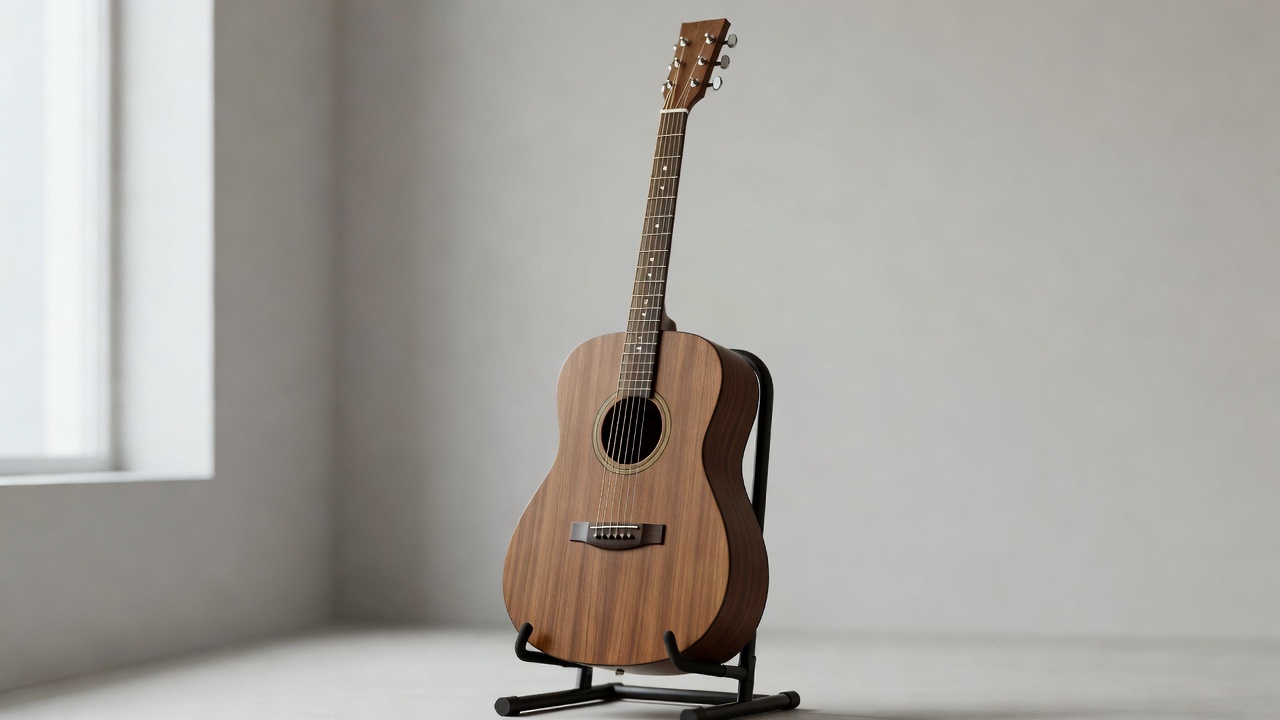
A steel string acoustic is the default first guitar for a reason. It needs no amplifier, it sounds good in a bedroom, it teaches you to play with your fingers or a pick, and it will happily cover pop, folk, country and rock rhythm.
What you give up is comfort. Steel strings at standard tuning pull harder than nylon, and on a cheap, poorly set up acoustic that means sore fingertips for weeks. A proper setup fixes most of this, and it is the single best money you can spend on a beginner instrument.
Who it suits
Players who want to sing along, strum chords, and play anywhere without plugging in. If you are drawn to acoustic singer songwriter music, this is your instrument.
Classical guitar – nylon strings and wider necks
A classical guitar uses nylon strings, which are softer on the fingers and produce a warmer, rounder tone. The neck is wider and flatter, the body is usually smaller, and the strings are spaced further apart. That spacing makes individual notes and fingerstyle patterns easier to place accurately, at the cost of being harder to wrap your hand around for barre chords.
Classical guitars are excellent first instruments for younger players, for anyone with smaller hands, and for anyone who wants to learn to read music properly. They are quieter than steel strings, so they suit apartments and late night practice.
If your ambition is rock, pop or metal, a classical guitar will still teach you your chords, but you will want something else fairly soon. If your ambition is to play classical repertoire, do not buy a steel string acoustic as a compromise. They are genuinely different instruments with different string spacing and different technique.
Electric guitar – easier on the fingers, more gear
Here is a fact that surprises a lot of beginners. A well set up electric guitar is usually the easiest of the three to play. Light strings, low action and a slim neck mean less finger pressure and faster progress in the first three months, which matters enormously when motivation is fragile.
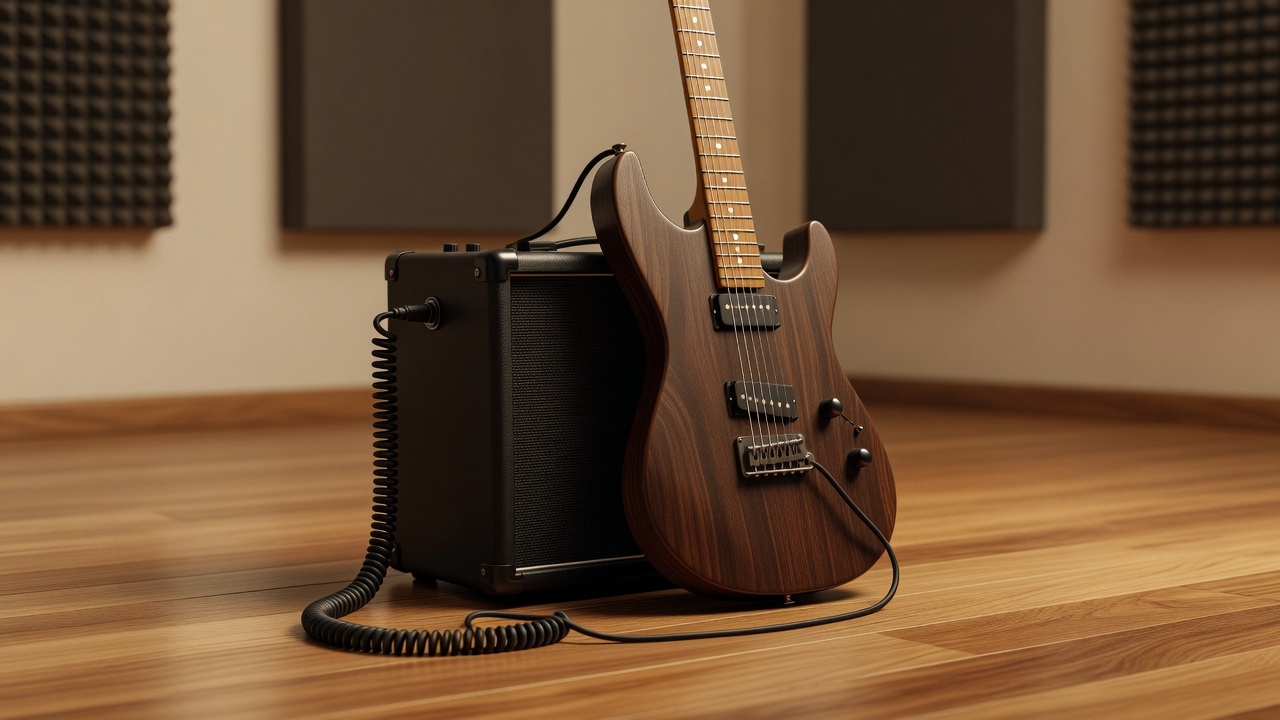
The catch is that an electric guitar is only half an instrument. You need an amplifier, and that is a real cost. You also need to think about where you will play it. A small practice amp with a headphone output solves the noise problem completely, and it is the reason a lot of players stick with electric through their first year.
Solid body or something with a hollow
Do not overthink this. A basic solid body with two humbuckers or three single coils covers an enormous range of music. Superstrat style guitars are comfortable, forgiving and cheap to buy secondhand.
What you actually need to start
- One electric guitar, set up properly.
- One small practice amplifier with a headphone jack.
- One cable. Buy a decent one, because cheap cables crackle and cut out.
Fit matters more than the badge on the headstock
Two guitars of the same model can feel completely different depending on setup and size. Check these four things before you commit.
Body size and scale length
Full size dreadnought acoustics are big. If you are small framed or under about 12 years old, look at a 3/4 or concert size body. Scale length, the vibrating length of the string, determines string tension and how far you have to stretch. Shorter scale guitars are easier on the hands.
Neck width
Classical necks are around 52mm at the nut, steel string acoustics around 43mm, and electrics often 42mm or less. There is no correct answer, only what your hand prefers. Play before you buy, or buy from a shop with a straightforward returns policy.
Action and setup
Action is the height of the strings above the fretboard. High action means you have to press harder, which means your fingers hurt sooner and your chords buzz. Any guitar shop can lower the action, adjust the truss rod and check the intonation. Budget for it. A budget guitar with a proper setup will outplay a more expensive one straight out of the box.
Things to check on any used guitar
- Frets: no deep grooves or flat spots.
- Neck: no twist, no forward bow, no crack where the headstock meets the neck.
- Bridge and saddle: no lifting. On acoustics, look inside with a phone torch for loose braces.
- Electrics: every pickup position should be quiet when you are not touching the strings.
A short buying checklist
- Pick the family based on the music you listen to, not on what is cheapest.
- Set a budget that includes setup, a tuner, a cable and a case or gig bag.
- Try at least three guitars in your price range. One will feel obviously better.
- Buy the one that felt best, not the one with the best online reviews.
- Book a setup in the first month.
If you are buying online, a clip on tuner, a spare set of strings and a padded gig bag are the three accessories worth adding at checkout. Everything else can wait until you know what you actually need.
Gear that helps
If you are ready to buy, browse our Acoustic Guitar range for steel string instruments set up in house, or compare Classical Guitar models if nylon strings suit your hands better. Electric players should start with an Electric Guitar plus a small Guitar Amplifiers combo with a headphone output, so you can practise at any hour without complaints from the neighbours.