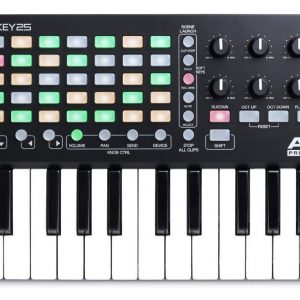
 Akai APC Key 25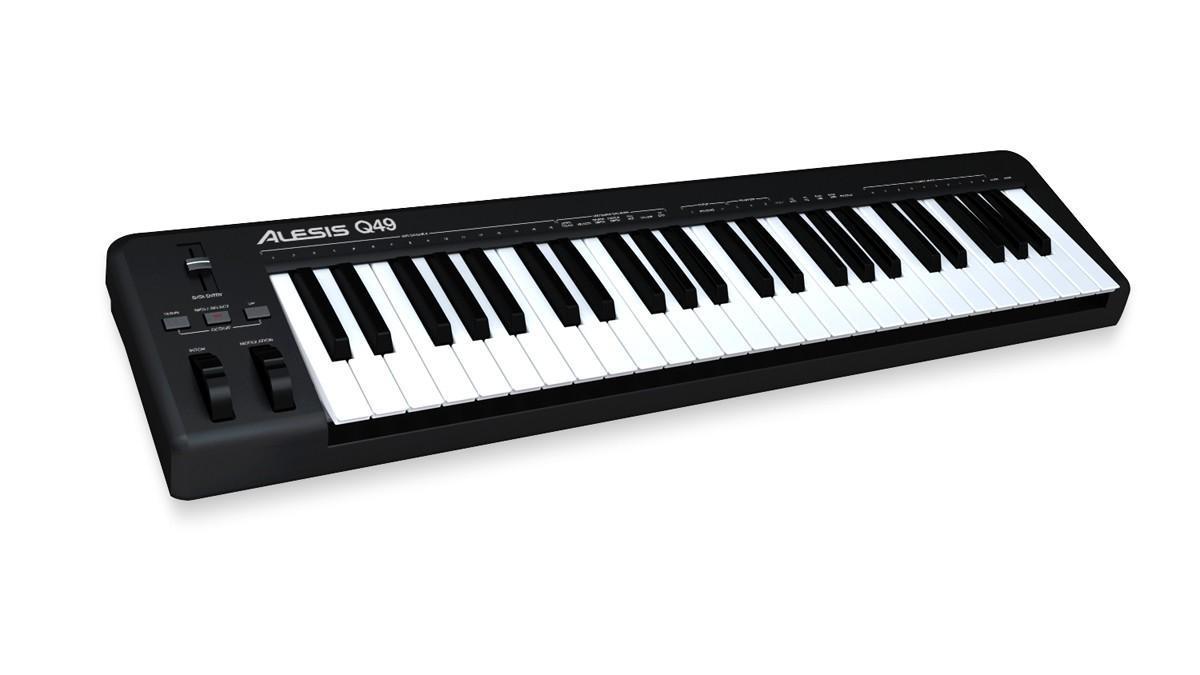
Description
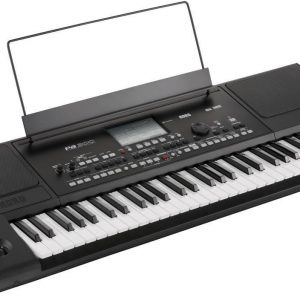
The Alesis Q49 MIDI keyboard is a versatile and affordable device that offers users the ability to control a wide variety of software and hardware instruments. With its 49 full-sized keys, pitch and modulation wheels, octave up and down buttons, and assignable data slider, the Q49 is a great option for beginners and professional musicians alike.
One of the greatest features of the Q49 is its compatibility with a wide range of music software applications. The device is class-compliant, which means it can be plugged into any computer or other MIDI-enabled device and be instantly recognized as a MIDI controller. Additionally, the Q49 is compatible with a variety of music software applications, including popular DAWs like Ableton Live, Logic Pro X, and Pro Tools.
The Q49 has a compact and lightweight design, making it easy to transport to gigs, and its plug-and-play capabilities make setup easy. The device is powered through USB, so no additional power supply is required, and it also includes a MIDI out jack, allowing it to communicate with other MIDI devices.
One of the standout features of the Q49 is its ability to assign MIDI data to any of its controls. This means that any of the device’s buttons, knobs, or sliders can be programmed to send MIDI data, making it easy to control different software parameters or hardware settings. This feature makes the Q49 an excellent option for live performance, as it allows users to switch between settings quickly and easily.
The Q49 also includes support for multiple velocity curves, allowing users to customize the feel of the keyboard to their liking. Additionally, the device includes transpose and octave shift buttons, which allow for easy keyboard transposition and octave changing on the fly.
Overall, the Alesis Q49 MIDI keyboard is an excellent option for musicians looking for an affordable and versatile MIDI controller. Its compatibility with a wide range of music software applications, customizable controls, and compact design make it a great option for home studios, live performances, and music production on the go.
Alesis Q49 properties
| Product name | Q49 |
| Brand | Alesis |
| Type | Keyboard Instruments |
| Keyboard Instrument | MIDI Keyboard |
| Drawbars/Sliders | Yes |
| Colour | Black |
Tristan Nolan –
As a musician, I was initially skeptical about investing in an Alesis Q49 MIDI keyboard, but it surpassed my expectations at 80%. Despite the potential problem of software incompatibilities with certain music production suites, I found that the keyboard’s compatibility with popular DAWs like Ableton and Logic Pro made this a non-issue. Moreover, Alexis Q49’s keyboard instrument feature was particularly beneficial for me as it provides a versatile range of sound options without needing additional hardware or software purchases. My advice to potential buyers would be to research your preferred Digital Audio Workstation (DAW) beforehand, and ensure that the MIDI keyboard you choose is compatible with it. Also, keep an eye out for features like onboard sounds, as they can greatly enhance the functionality of your MIDI keyboard.
Emery Mcfarland –
In the quiet hum of a late-night session with my Alesis Q49, I found myself not just playing notes but tracing the fragile threads that bind creation to chaos a duality that feels eerily resonant today as the US government’s 44-day funding lapse unravels lives at airports, where dreams of travel dissolve into queues and cancellations. Tristan Nolan praised this keyboard’s “80% satisfaction,” yet I wonder: Does a tool that promises freedom through its onboard sounds not risk becoming another cage, like the utopian chains dissected in Pluribus: Szczęście jako więzienie rozcinamy duszę utopii? That article, check it here, whispers of a world where joy is both a prison and a compass a metaphor that strikes me as I type this review.
Tristan’s faith in the Q49’s “compatibility” with DAWs like Ableton feels almost nostalgic, as if we’ve forgotten the ache of software incompatibilities those silent fractures between vision and execution. Yes, the Q49’s sounds are versatile, but versatility is a hollow promise when it demands the same sacrifices as any utopia: control over one’s own tools, not surrender to them. The keyboard’s “benefit” lies not in its onboard options, but in how they limit a paradox I found hauntingly familiar in the article’s dissection of happiness as a gilded cage.
Let me ask you this: If technology is meant to liberate, why does it so often mirror the systems that bind us? The Q49, for all its charm, feels like a lover who promises infinite horizons but asks you to wear blindfolds to see them. Tristan may have found 80% satisfaction but I wonder if his joy was not in the keyboard itself, but in the illusion of its completeness.
And as we gaze at the world’s latest unraveling airports clogged with the weight of bureaucracy perhaps we should ask: Is this keyboard a reflection of our own age, where promises are made in code and broken in silence?